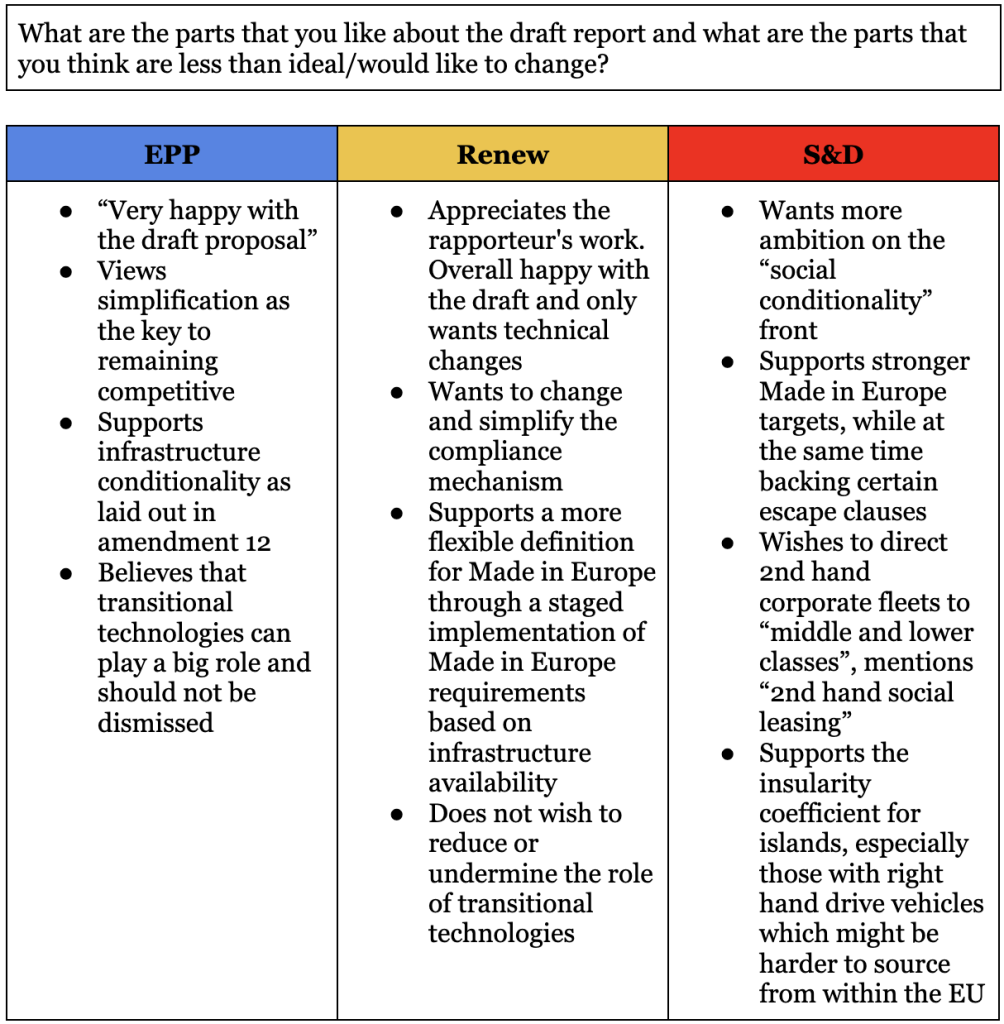
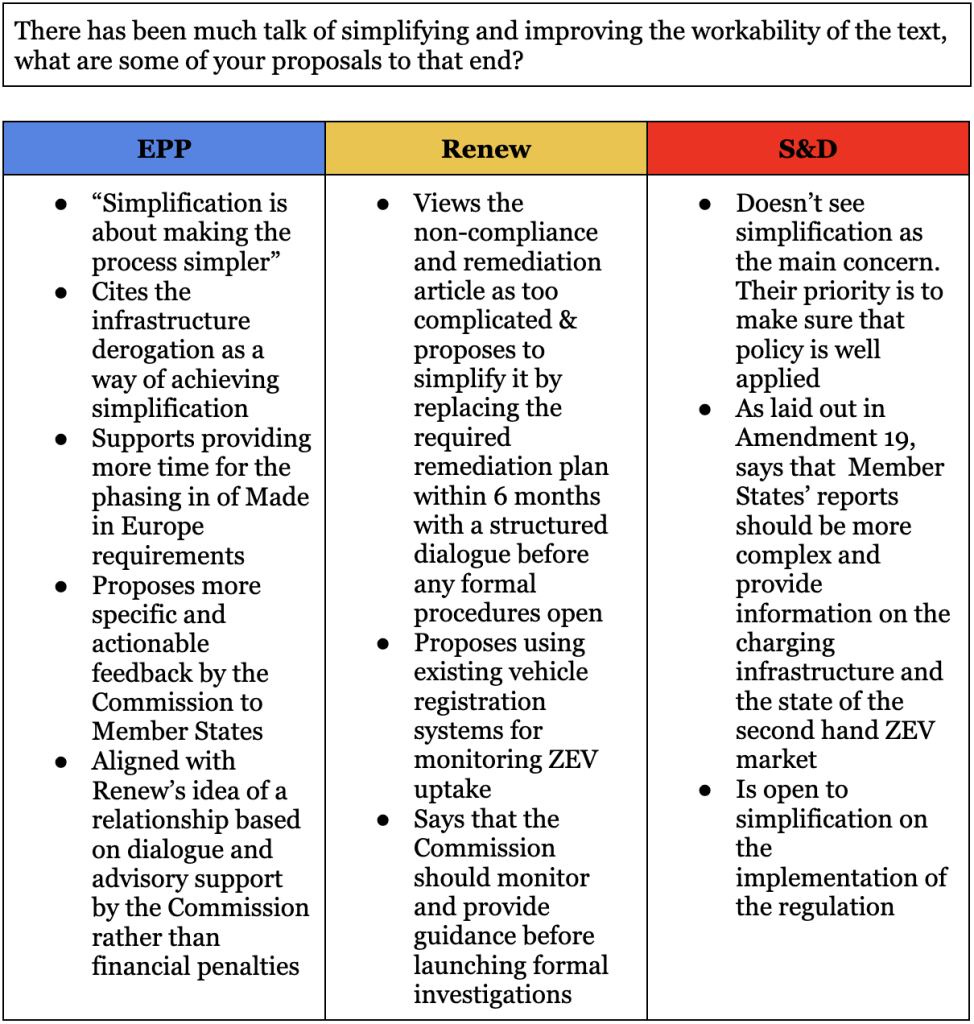
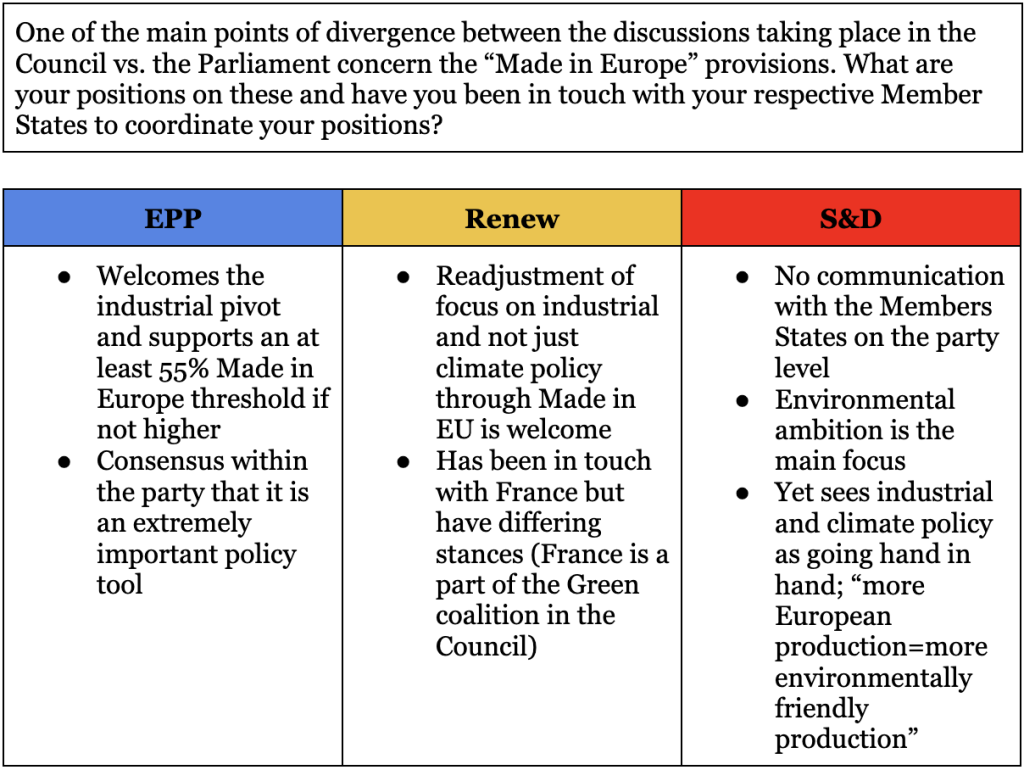
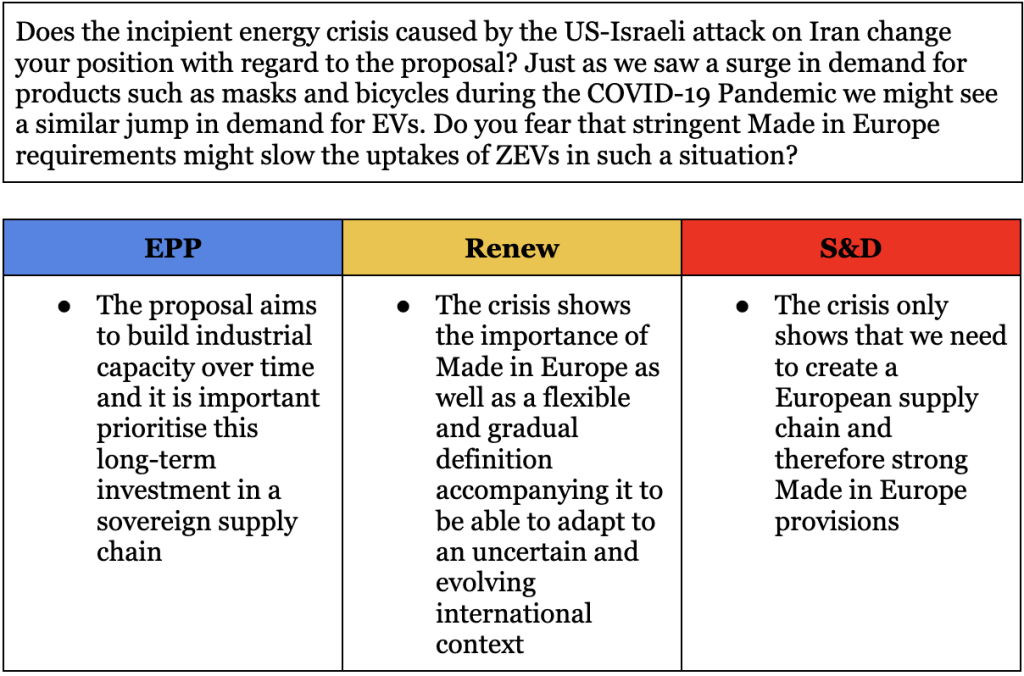
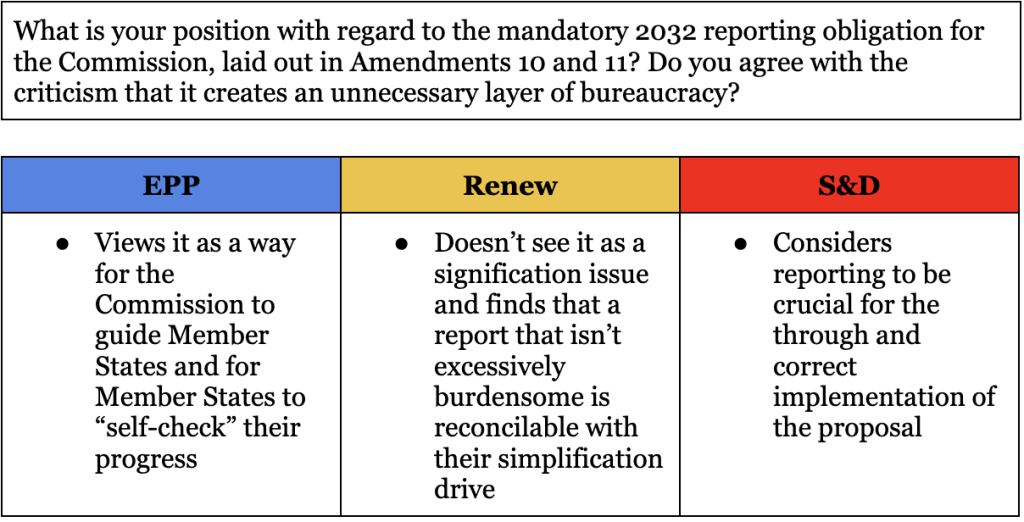
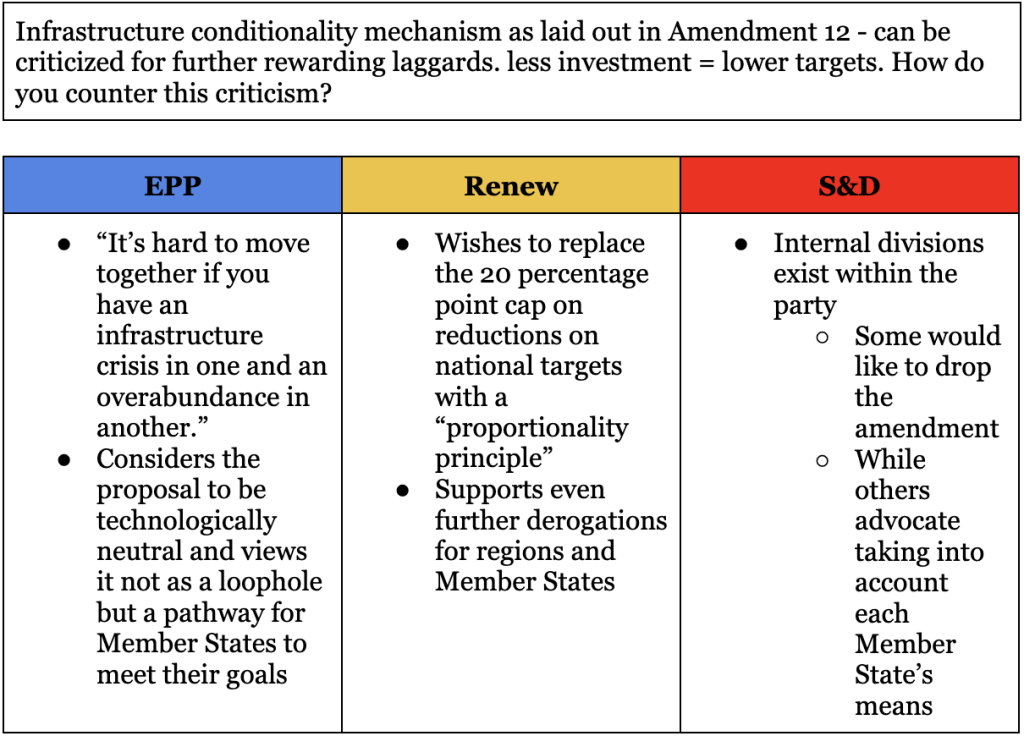
With the vote fast approaching the EPP, S&D, and Renew coalition has all but absolute control of which amendments will make it through. Le Monde has conducted an exclusive interview with EPP Coordinator Yeva Kimakovych, S&D Coordinator Anouck Guillard, and Renew MEP Laura Bertomeu Cuenca. We have organised their positions on each issue into tables for easier comparison.
At the time this interview was conducted, EPP wished to state publicly that they were not collaborating with the far right. They have now withdrawn that statement.
Following further inquiry, Renew and S&D stated that building a coalition of the centre remains their priority and EPP voting with far right groupings on certain amendments would not automatically jeopardize their partnership.
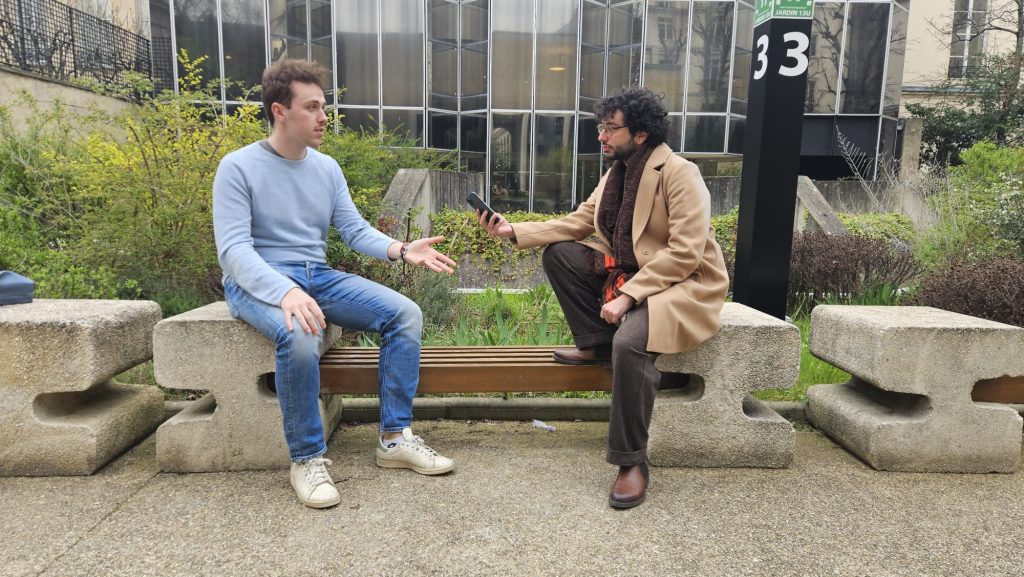
Le Monde: Dear Mr. Vezzoli, thank you for picking Le Monde as your platform of choice for this interview.
To start off, what is your general position regarding the two proposals put forward by the European Commission?
Filippo VEZZOLI | ENVI | EPP – ES (Vice-Chair): Thank you very much for hosting me and for giving me the opportunity to discuss this topic.
In general, we in the European People’s Party are very satisfied with the proposal from the European Commission. We are glad that the Commission’s proposal aligns with many of the points we have previously advocated for.
My specialization focuses on cars and vans and CO₂ emissions. In general, we see this proposal as an important tool to make Europe both industrially competitive and geopolitically relevant, while still maintaining strong environmental commitments. At the same time, it introduces a degree of flexibility that reflects the geopolitical circumstances we are currently facing.
We believe this approach helps safeguard our economies and ensures that Europe remains prosperous and competitive on the global stage.
Looking more specifically at the automotive package, transport and automotive policy are very closely connected to environmental policy. In the European Parliament we remain firmly committed to the EU’s clean and green agenda, including the application of these goals to the transport sector.
For this reason, many of my colleagues working on corporate vehicle legislation strongly support the Commission’s proposal in principle to increase the presence of environmentally sustainable vehicles in the corporate sector.
Le Monde: Many of the reasons you mentioned were also cited when the EU initially proposed and adopted the 2035 target to phase out internal combustion engines and move to 100% zero-emission vehicles.
What has changed since then that leads you to support these amendments to the existing framework?
Filippo VEZZOLI | ENVI | EPP – ES (Vice-Chair): Many things have changed. The European Union has faced several challenges that require it to take a more proactive role internationally.
Within the EPP we want the EU to play a strong role not only as a global political actor but also as an economic power that delivers prosperity and stability for its citizens.
One key priority for us is safeguarding European production, which largely takes place within the EU. This is particularly important for small and medium-sized enterprises, which represent about 99% of our economy. Protecting SMEs is therefore central to protecting European jobs.
SMEs often have the most difficulty adapting quickly to environmental legislation. They can sometimes be criticized for not complying quickly enough with policy changes, but the reality is that they simply face greater structural challenges
For this reason, we believe legislation should create a level playing field and include mechanisms that allow companies—especially SMEs—to adapt gradually.
The proposed compensation mechanisms are meant to provide that flexibility. They give companies time to move toward renewable and sustainable technologies without facing sudden economic hardship or losing the economic foundations they currently rely on.
Recent geopolitical and economic developments only reinforce this argument. During periods of economic or geopolitical instability, it is typically ordinary citizens and small businesses that suffer the most—not multinational corporations.
Le Monde: You mentioned that the EU should play a leading role in the transition to electric vehicles and new zero emission technologies. However, during the period since the EU adopted its 2035 targets we have seen China surpass Europe both in EV adoption and in the development of competitive and affordable EV models.
What do you think explains China’s relative success and Europe’s relative struggles in this area? And in your view, will relaxing some of these targets or introducing “Made in EU” clauses help Europe catch up?
Filippo VEZZOLI | ENVI | EPP – ES (Vice-Chair): First, I would not describe the Commission’s proposal as diluting the targets. Instead, we see it as strengthening the European economy within the current circumstances.
Our approach is to recognize the current structure of the European economy and build on its strengths. European entrepreneurs have strong initiative and innovation, but many still require support during this transition.
The transition must be gradual and carefully implemented. If it happens too abruptly, the economic consequences could appear very quickly.
Regarding China, it is clearly a major economic actor and an important trading partner for the European Union. Chinese imports are an integral part of global trade flows, including our own.
However, Europe must also develop its own autonomous industrial base. We cannot simply remove China from the equation overnight—that is not how global economics works.
Instead, Europe should strengthen its own economy while remaining open to partnerships. The European Parliament has played an important role in shaping trade agreements and partnerships negotiated by the Commission.
Within the legislation itself there are also safeguards. For example, certain provisions ensure transparency and prevent companies from exploiting the credit system unfairly. Manufacturers must meet EU production and environmental standards in order to benefit.
We are also advocating stronger transparency measures so the Commission can monitor companies participating in the credit system and ensure that foreign subsidies do not distort competition.
Linking this legislation with the EU’s foreign subsidies regulation is one of our priorities. I will raise this issue in the upcoming committee session as part of proposed amendments. These amendments are not hostile to the proposal—they are meant to complement and strengthen it.
Le Monde: Across Europe we see significant differences in the adoption of zero-emission vehicles. Northern European countries like Denmark have much higher adoption rates, while countries in Southern and Eastern Europe tend to lag behind in charging infrastructure and EV purchases.
Are there tensions within your political group about how forcefully to push for EV adoption given these regional differences?
Filippo VEZZOLI | ENVI | EPP – ES (Vice-Chair): Within the European People’s Party we have generally remained cohesive on the overall direction of policy.
However, it is true that the development of industries related to zero-emission vehicles varies across Europe. Countries such as Spain face greater challenges in this transition.
This is precisely why we emphasize the need to support existing industries. In Spain, for example, the automotive sector is a major contributor to GDP and employment. Italy also has strong automotive traditions.
These industries, and the supply chains that support them—many of which are composed of SMEs—must be accompanied through the transition to zero-emission technologies.
We are beginning to see investments in this direction. There are partnerships involving companies such as Stellantis to develop green vehicle production in Spain. But more work is still needed. The goal is to ensure that these industries remain competitive globally while also meeting environmental responsibilities.
Le Monde: As a final question, we seem to be entering yet another energy crisis with the indefinite closure of the Strait of Hormuz, which is causing fuel prices to skyrocket and is sure to damage Europe’s industrial base.
Do you think the current situation should make the EU reconsider its priorities – either by slowing down the transition to ZEVs or accelerating it?
Filippo VEZZOLI | ENVI | EPP – ES (Vice-Chair): The situation in the Gulf is obviously very serious. In some ways it reinforces the importance of the transition we are pursuing. However, supporting our economic base through compensation mechanisms does not mean abandoning our long-term goals.
Of course, fluctuations in energy prices affect us. But we should not react by drastically changing our strategy. The current proposals do not weaken our targets. In fact, the framework still allows for transitional fuels such as plug-in hybrids and other low-carbon technologies that can help bridge the gap toward fully zero-emission vehicles.
The pace of the transition must remain consistent and determined, but it should also recognize transitional technologies that move us toward our final goal.
European institutions and national governments will need to carefully manage the economic consequences of global conflicts like this. However, these challenges should not undermine our broader objectives of competitiveness, environmental sustainability, and long-term economic stability.