Exclusive Interview
What is the “Green Coalition”? — An exclusive Interview
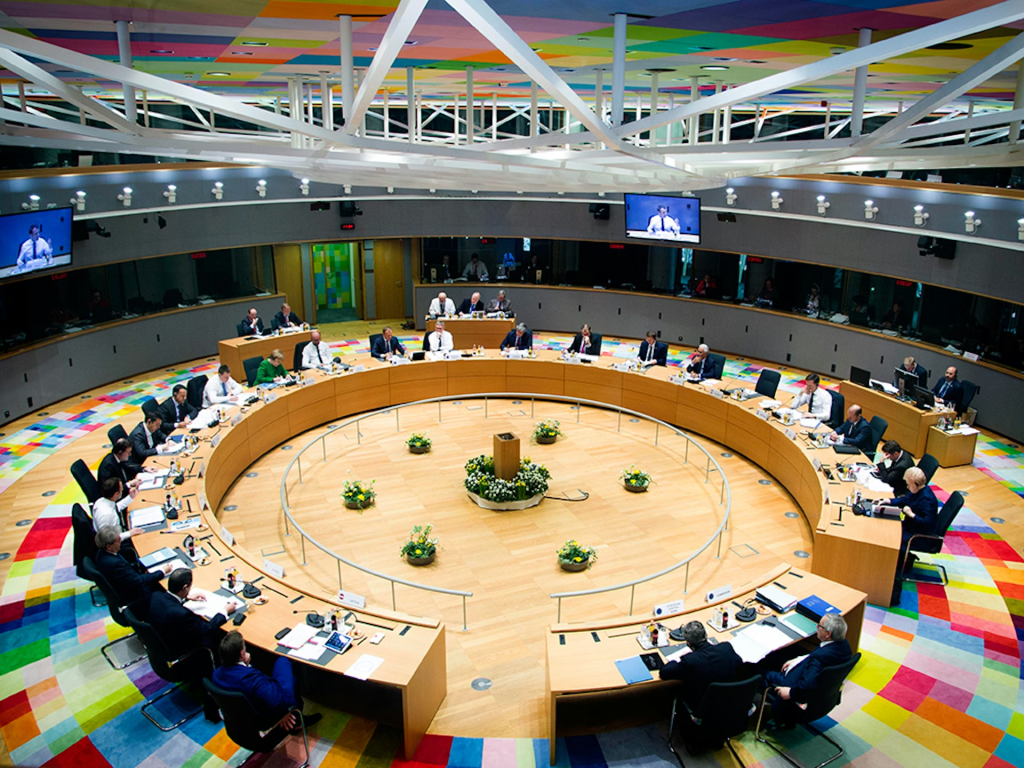
The Financial Times sat down with the member state delegates of France (Johanna Nagel), the Netherlands (Coline Seigneur), Ireland (Baudoin Pomart) and Luxembourg (Mathias Setterblad) to the Council of the European Union to speak about the negotiations on the CO2 standards and the clean corporate vehicles (CCV) regulations.
The delegates told the FT that they represent the “Green Coalition” in the Council — an alliance of member states that plead for more climate ambition in the automotive package. Beyond the Netherlands, France, Ireland and Luxembourg, the coalition encompasses Belgium, Denmark, Finland, and Sweden. The eight members plan to publish a statement before the next round of formal discussions on Friday.
The exchange took place on the 23rd of March.
Joshua Starbatty in Paris | Published MAR 25 2026
FT: Hello Delegates, thank you for agreeing to speak with the Financial Times. The countries you represent as well as Belgium, Denmark, Finland, and Sweden have decided to join forces in the negotiations on the automotive package and build a “Green Coalition”. Can you outline what exactly this coalition is and how it works?
France: We are like-minded member states that are strongly aligned on both proposals. Our clear goals are full zero-emission mobility and to avoid regulatory ambiguity. What our industries need is predictability. That’s why we stand for ambitious green targets.
FT: How does the coalition cooperate? Are you loosely coordinating broad positions or did you establish a close technical working relationship where you draft joint modification proposals for the files?
France: So far, we coordinated on answering the questionnaire [on the CO2 standards and clean corporate vehicles] from the Council presidency. Here we really worked closely together and aligned our positions.
FT: You said that your coalition’s priority as regards the legislative proposals are ‘ambitious green targets’. What does this mean specifically regarding the content of the two files? What exactly do you want to change about the texts?
The Netherlands: Starting with the corporate [vehicles] proposition, regarding our climate and net-zero ambition, we aim notably on the “made-in-EU” element. We are aligned on the fact that this is not a protectionist measure, but that it is about remaining competitive in the transition. We believe in having a quite ambitious share of supply chains that are made in the EU. We also think that this share of ZEVs should be increasing progressively across the years starting by 2030.
France: Another point is the calculation of the national targets based on the GDP. As we want to ensure feasibility, we see it as very important that infrastructure readiness is taken into account across member states and that member states can decide on tools that they use. As a coalition, here we also work closely with key partners like Germany. Generally, as said, the targets should be ambitious and focused on zero-emission vehicles. Beyond that, there is another important issue for us that is not mentioned in the proposal yet: employment. This is key for our manufacturing countries, and here we also align with member states like Germany that we have to include the question of how all this is affecting our employment in the review clause.
The Netherlands: ‘We are aligned on the fact that this [the made-in-the-EU instrument] is not a protectionist measure, but that it is about remaining competitive in the transition.’
FT: How do you stand towards the Commission’s decision to allow PHEVs as “low-emission vehicles” to count towards some member state fleet targets in the CCV?
Ireland: We are mainly pushing for prioritizing zero-emission vehicles. Moving to the second proposition of the Commission [the CO2 standards]: Here we are pushing for maintaining the super credits. But we would like to exclude the e-fuel credits from the proposals, as this will not help the transition to full electric but would instead prioritize low-emission vehicles.
FT: To offset emissions under the CO2 standards proposal, not only e-fuels are an option, but manufacturers can also use low-carbon steel. Do you seek to maintain these “low-carbon steel” credits?
France: Our [the coalition’s] member states invested in electrification. That is why we are not supporting the fuel credits. But we are open to discuss the steel credits.
Luxembourg: Luxembourg is a new addition to the coalition, so we haven’t been in very early talks between the other members, but we’re very well aligned with the goals. Regarding the credits for low-carbon steel and e-fuels, we think a key difference is that e-fuels are not part of the value chain of zero-emission vehicles. Instead, it only encourages suppliers of fuels and low-emission vehicles to continue their work, whereas low-carbon steel can be part of the value chains and therefore encourage the production of electric vehicles to attain our objectives. This is one of the key industrial differences that make us support low-carbon steel but not e-fuels.
Ireland: ‘… we would like to exclude the e-fuel credits from the proposals, as this will not help the transition to full electric but would instead prioritize low-emission vehicles.’
FT: Now, as a consequence this means that your coalition supports the option to offset emissions and does not actively push to stay with 100 per cent of zero-emission vehicles by 2035? In other words: You generally back the Commission’s initiative to scrap the combustion ban?
Ireland: No. For the target of 100 per cent, the coalition is fully supporting it, except Belgium, which has national targets inside its law. We need to work this out, but otherwise we support it. In the future, we will probably have to make some concessions to other countries for the law to pass.
Luxembourg: It’s very important to understand that while we support the 100 per cent objective, realism must invite us to understand that perhaps we will not reach that. But anything more than 95 per cent would be preferable.
France: Again, we want to underline that our focus is on the 100 per cent target. This is our starting point to negotiate with other member states. We might have to find some kind of compromises. But to explain our motivation: behind this ambition to uphold the 100 per cent target is competitiveness. We all know that the EV race is a global race, and if we do not provide clarity to scale investments in Europe, industry will go elsewhere. So, this is about reaching the climate targets but also staying competitive in Europe.
Luxembourg: ‘It’s very important to understand that while we support the 100 per cent objective, realism must invite us to understand that perhaps we will not reach that.’
FT: How unified is your coalition? Do you cooperate mostly on the points you raised before? That is to say, are there contentious issues within the coalition or issues you do not address jointly?
Ireland: We are very unified. As we said previously — the last questionnaire sent by the Council presidency — we filled it out together for all questions. Everything was answered jointly. Of course, we had to try to find compromises on some points, but we have the same view for the proposals. So, I would say we are aligned on everything, except for Belgium, whose national law blocks them from supporting the 100 per cent target by 2035. But they are fine to go for 90 to 95. For now, we [the coalition] go for 100 per cent.
France: Importantly, Belgium supports the rest of our proposals, it’s just the 100 per cent target they cannot support.
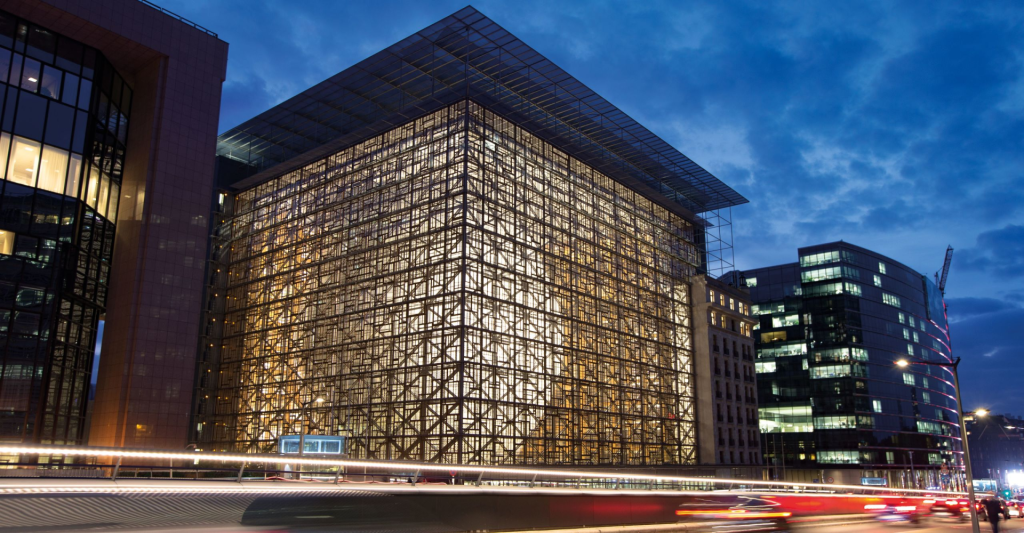
FT: Moving on to the state of the negotiations. The Council votes on its general approach by a qualified majority. With your newest edition of Luxembourg, you are currently eight member states and would need at least seven more states to push through your agenda. In the light of powerful countries such as Germany, Italy, or Poland that have, at least historically, argued for technology neutrality, more flexibility clauses and overall less ambitious electrification targets, do you see a potential for a green majority?
The Netherlands: In terms of climate goals, we still remain very ambitious, but we are realistic in terms of competitivity. We really understand the concerns of states like Germany, who are ambitious in terms of green goals, but who are also quite concerned regarding their own industry. We are open to more discussion and to find concessions with those states which are like-minded, as we have similar concerns in a certain way.
Luxembourg: One of the strengths of the Green Coalition is its ability to unite countries that may seemingly have different national goals. That may be not as true for Nordic countries, which may be more aligned. But, for example, Luxembourg was a rather late addition, because at first it was not obvious that our national ambitions were completely in line with the Green Coalition. So rather than seeing this coalition as a way to prevent any more reduction [of ambition] in the proposals, it is really an invitation to build something with other countries and find common ground.
The Netherlands: ‘We really understand the concerns of states like Germany… . We are open to more discussion and to find concessions …, as we have similar concerns in a certain way.’
FT: Following up, which countries are you trying to get on board with the “Green Coalition”? Who are you working with closely?
Luxembourg: We are still in very early stages of negotiations. We are still looking to understand how the balance of power is distributed within the Council regarding different positions. Beyond Germany, which would be a strong ally to push through our agenda, there are several countries which may find interest in working with us, such as Spain for its extensive green powered energy sources. But also the different demands that countries such as Greece or Austria mentioned in the previous Council meeting may — to a certain extent — align with the interests we promote. I am not saying that any work has started with them. But they could be promising leads in order to reach a broader agreement within the Council.
Ireland: That is right. The following Council meeting on Friday will also help us better understand the balance of powers to launch further negotiations.
FT: Do you see something like a “counter-coalition” forming in the Council? Are there countries organising together that are very much opposed to your agenda?
Luxembourg: Thinking about counter-coalitions is not the proper way to engage in negotiation within the Council as Europe remains united in order to promote the green transition. Nonetheless, there have been expressions of divergence during the last session of the Council, where we could understand that national contexts, especially from countries coming from Eastern Europe, are vastly different from the ones that we know at home and that may call for adjustments in the proposal. But then again, we’re not seeing this as a game of one coalition against the other but rather finding an understanding among 27 very motivated EU partners.
Luxembourg: ‘… there are several countries which may find interest in working with us, such as Spain for its extensive green powered energy sources.’
FT: You said that you are only in the early stages of the intra-Council negotiations. Still, from the proceedings to date, where do you see the Council’s general approach headed? Will it be close to the Commission’s proposal? What ambition can we expect?
Ireland: Based on what was said in the first Council meeting, we think everyone is more or less agreeing on the current proposal. Most modifications being made, regard flexibilities and specific numbers, but the general idea of the text will remain.
Luxembourg: I completely agree. I would say that the Commission proposal regarding the greater objectives is rather cognizant of the different desires of different member states, whether the states of the Green Coalition or other states who have a bigger desire for lower objectives in terms of emissions. However, a weakness that we could point to in terms of the Commission’s proposal would probably be the lack of specificity for certain countries, whether it’s because of their size or because of their climate. For instance, several countries, among which Denmark and Sweden from the Green coalition, have pointed out that current targets do not fully account for batteries’ lower performance in cold conditions. So, I think that while the Commission’s draft is very solid, it lacks the specificities to allow for every country to be on board already.
FT: Delegates, thank you for your time.
Also read:
The rapporteur on the Clean Corporate Vehicles regulation sat down with the FT to speak about the TRAN Committee’s draft report and her work.