The Big Read
The divisive question of how to save the European automotive industry
EU lawmakers are set to start negotiations on new rules to bolster decarbonisation and competitiveness of the bloc’s automotive sector this week, after the Commission had presented an array of legislative proposals in late 2025. Brussels’ initiative comes in a time of crisis for the EU’s automotive industry, which grapples with the EV transition, weak demand and foreign competition. Stakeholders and legislators are split on the files, foreshadowing complex discussions.
Joshua Starbatty in Paris | Published FEB 18 2026
When the European Commission (EC) unveiled its automotive package at the end of last year, it framed it as a kill of two birds with one stone: a cure to the European car industry’s malaise that is also fit to push the decarbonisation of the bloc’s transport system.
“Innovation. Clean mobility. Competitiveness. … we are addressing them all together”, Commission president von der Leyen announced.
The proposals, that among others include controversial plans to dismiss the ban of combustion vehicles by 2035 and mandatory targets for the uptake of EVs and hybrids in corporate fleets, come in a moment of structural stress for a sector that is vital to the Union’s economy and identity.
With many of the largest global carmakers like VW and suppliers like Michelin headquartered in the EU, the combined economic activity of manufacturing and related up- and downstream services amounts to 7 per cent of the bloc’s GDP and supplies just under 14mn jobs.
This corresponds to 6.1 per cent of the Union’s total employment, often connected to national or regional identities, especially in the manufacturing powerhouses like Germany, Spain, or Czechia.
And not to forget, the sector is majorly important for the European export engine: €255bn of automotive product exports to non-EU countries in 2023, totalling a €125bn trade surplus.
But the industry fights a harsh battle.
The accelerating global technology shift away from fossil fuels urges the sector’s rapid transition, while it struggles with demand that has not returned to pre-covid levels. ACEA, the European carmakers association, estimates domestic registrations in 2024 were down 18.4 per cent versus 2019, while production fell by 6.2 per cent year-on-year in 2024.
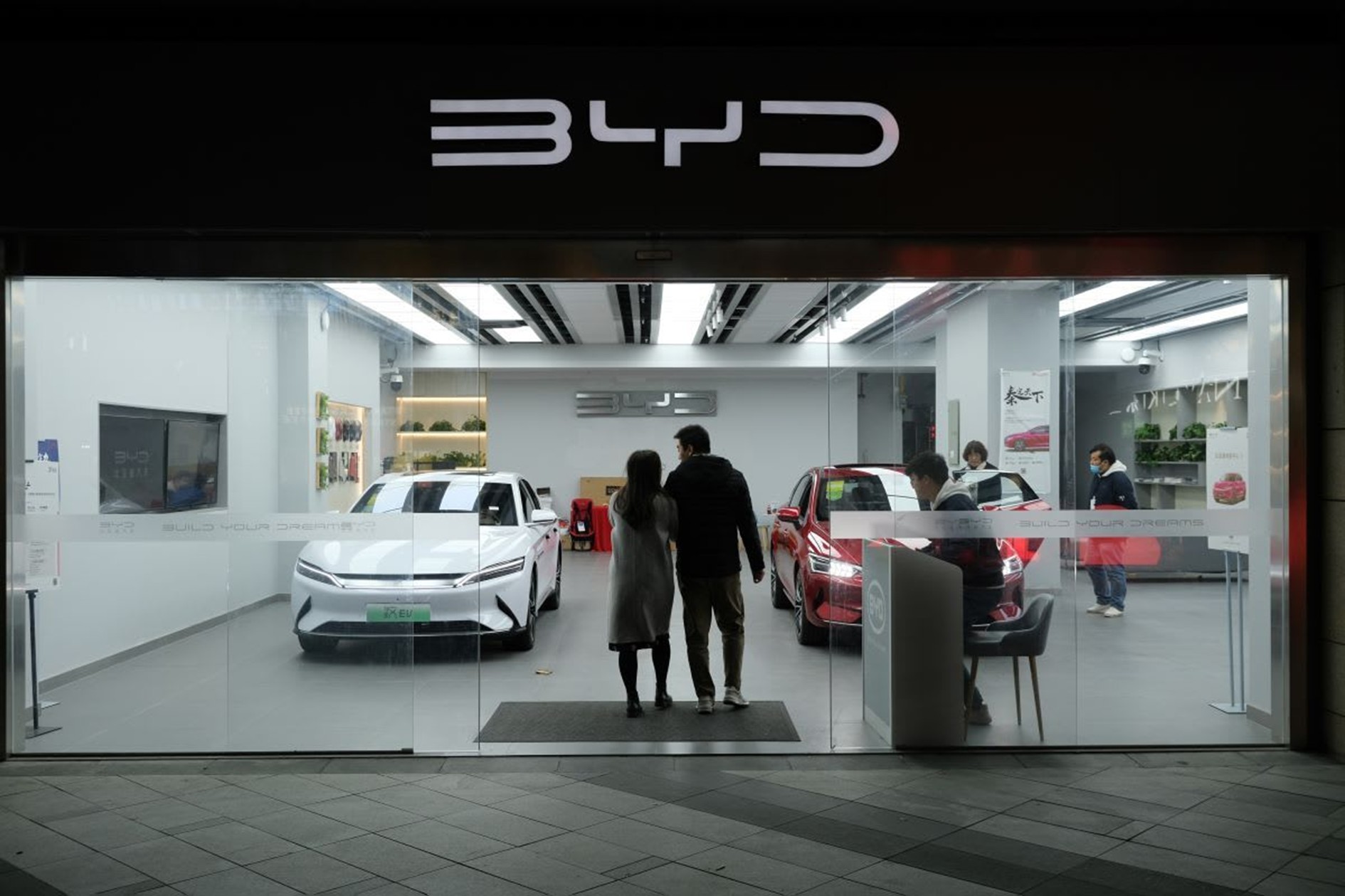
Simultaneously, competition in manufacturing and battery-technology intensifies – most notably from Asia. In the first half of 2025, Chinese brands upped their new car registration share in the EU to over 5 per cent, despite import tariffs on EVs set by the Commission in late 2024.
This happens while European players deal with decreasing sale shares two critical export markets – the US and China – as Donald Trump hampers free trade and Chinese carmakers profit from hefty government subsidises.
And the crisis shows up in the books.
Stellantis’ 2024 net revenues fell by 17 per cent year-on-year. Mercedes-Benz saw the profit margin of its automotive business plummet from 14.6 per cent in 2022 to 5 per cent last year, and VW, which plans to cut 35,000 jobs, announced a sharp profit decrease in its most recent half-yearly financial report.
At the beginning of 2025, Brussels signalled it had understood the precarious situation.
Back in March, Séjourné said the automotive industry was “in mortal danger”, after engaging in first dialogues with the industry and presenting an automotive action plan.
Now, almost a year later, the EC claims it was successful in putting forward a comprehensive package that balances its strategic goals of industrial competitiveness, the 2050 net-zero target and a reduction of the bloc’s dependence on fossil fuel imports.
However, it has become increasingly visible that a nine month-long strategic dialogue preceding the initiative could not dissolve disagreements over the right approach for the sector: Despite the political groundwork, stakeholders and lawmakers remain split over the drafts.
Initially, the industry sounded appreciative.
Most carmakers welcomed a retreat from full combustion phase-out as intended in the revision of the CO2 standards regulation. The industry had heavily lobbied for this result of in advance.
“It is an important first step that the EU Commission no longer pursues technology bans as a guiding principle, but recognises the future viability of the combustion engine”, BMW commented – a position mirrored by Mercedes-Benz and Stellantis.
However, supporters were quick to formulate reservations.
Hildegard Müller, president of the powerful German automotive association VDA, said, “Brussels has disappointed with its proposed draft”, warning that the intended conditionalities on manufacturer flexibilities for bio- and e-fuels as well as green steel are “beyond our control” and create planning uncertainty.
The European manufacturers lobby ACEA commented in a more measured way, saying that “strict conditionalities to various elements of the package may have a counterproductive effect on technology openness and competitiveness”, while CLEPA, the European supplier’s association, labelled the initiative as “complex and potentially costly”.
Upon request, the group’s representative Georgia Premoli also told the FT that much will now depend on “how it [the package] is implemented”, fearing costs could “be pushed down the chain”, if “reporting, verification, and traceability obligations” were “displaced onto suppliers and SMEs”.
A widely opposite stance to the revision of the CO2 standards regulation – yet not a less critical one – was taken by environmental and EV groups. They doubt whether the move is actually helpful to the sector’s transition.
Asked about it, Nilam Shapkota, policy officer at NGO Transport & Environment commented: “This is not a victory for civil society or climate leadership. It is a concession to parts of the automotive sector that are reluctant to move beyond combustion engines.”
The new flexibilities are not only considered as slowing progress towards the EU’s climate goals but also to send a confusing signal to the industry, diverting investment from EVs and undermining the future of the bloc’s manufacturing base.
Industry outlier Volvo said the “Weakening of long-term commitments … risks undermining Europe’s competitiveness for years to come”, and E-Mobility Europe called it “the wrong time for Europe to take the wind out of its own sails”, pointing to the record-breaking year for EV sales in 2025. After a dip in 2024, the BEV share of the new sales in the EU reached 17 per cent last year.
Upon request, the EV industry lobbies’ representative Jonathan Depre told the FT that as “countries all over the world … have provided substantive investments in the sector, … putting EVs at the locus of Europe’s industrial strategy is of utmost importance for Europe to remain a strong and independent voice in the international system”. He added, “Businesses are ready”.
Climate Groups’ Lilas Perrier took a similar line, stating that “competitiveness is specifically the reason why European policy makers shouldn’t delay CO₂ emission targets”, and pointing to the need for a stable policy environment to let European carmakers access economies of scale for their electrification rollout – thereby cutting prices and driving innovation.
She also voices concern regarding European strategic autonomy: “… given the geopolitical context concerning EU relations with Russia, the United States and China, it is fundamental for the EU to acquire energy sovereignty … Nevertheless, the EU is currently going in the opposite direction by backtracking on climate goals and by keeping financing fossil fuels.”
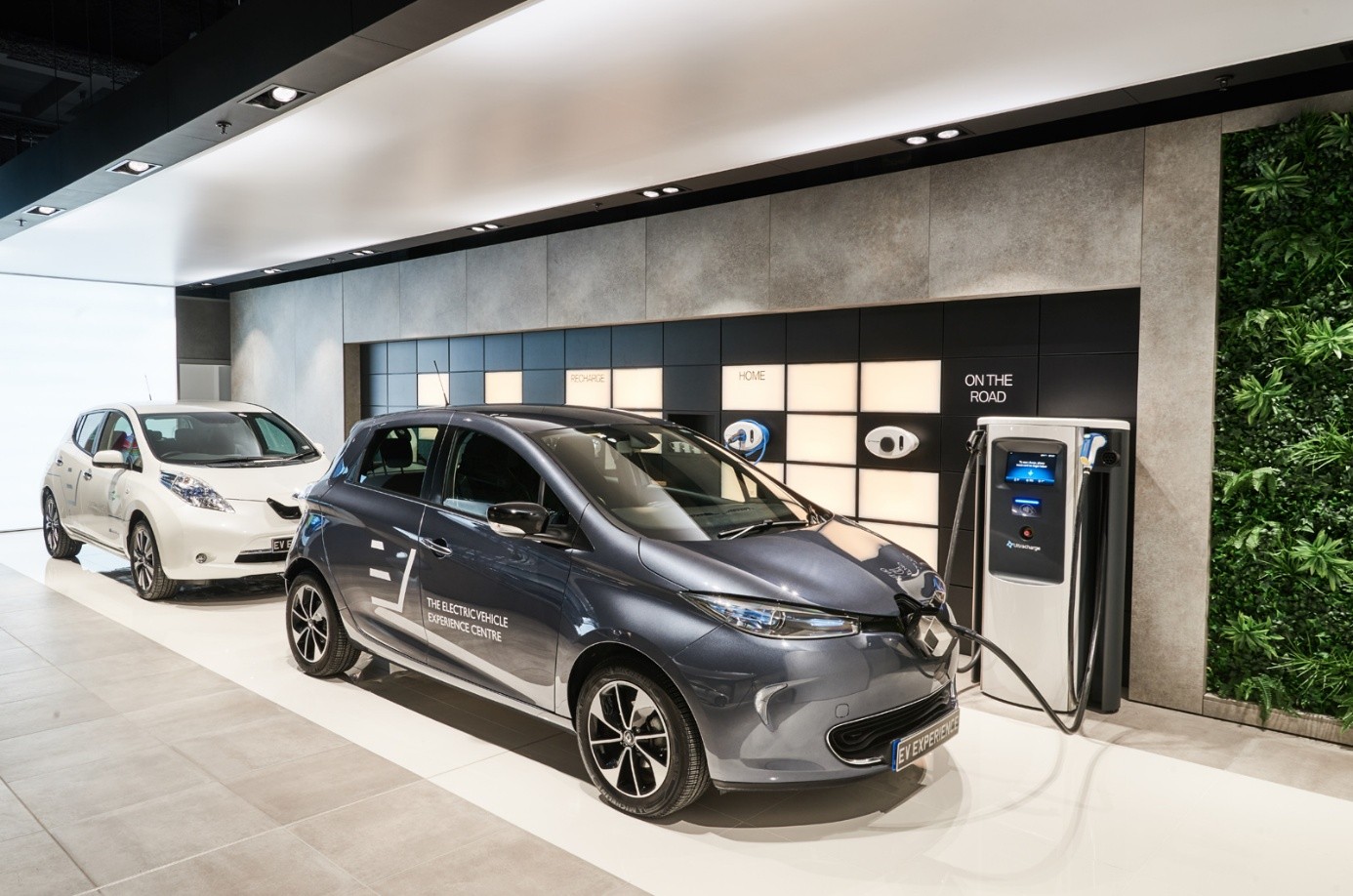
The Commission’s Clean Corporate Vehicles initiative – a draft regulation on the procurement of EVs and hybrids in firm fleets, is similarly controversial.
While demand stimulation was generally welcomed, the proposal to set mandatory targets drew headwind from industry representatives. They argued that the measures will backfire without faster charging infrastructure build-up. The responsible Alternative Fuels regulation had not been touched by the Commissions package.
In consequence, VDA branded the targets as “completely unrealistic”, calling for the EU to instead address framework conditions to more effectively scale EV uptake.
ACEA agreed, criticising the fixed targets as “running counter to the necessary market and incentive-based approach”, while also lamenting that heavy-duty vehicles are not receiving any demand stimulus.
Anatole Rawas, representative of lobby organisation LeaseEurope, told the FT that “the measures … will not help” to transition towards decarbonisation but “only destroy jobs”, since “The lack of infrastructure (notably recharging points across the EU) will prevent our usual customers from renting BEVs.”
The leasing market is particularly important regarding corporate fleets. According to the Commission, 41 per cent of newly sold cars and 32 per cent of vans were leases or long-term rentals.
Environmental and EV groups were far more welcoming to the obligatory member state targets, arguing however that the ambition remains too low, and that only full electric cars and vans should count.
Climate Group told the FT that it deplored the “intention to include hybrid vehicles and alternative fuels as transitional technologies” adding, this “risks diluting investments and therefore slowing down the supply of electric vehicles.”
The non-profit added that the targets should be harmonised across the member state to prevent market fragmentation, potentially leading “companies to choose the country where the rule is the most lenient to register or manage its fleet… .”
According to the Commission’s draft proposal nine countries are expected to guarantee 95 per cent of new corporate registrations are zero-emission vehicles (essentially full battery or fuel cell EVs) by 2035. Other member states, mostly the eastern European ones, are viewed with less stringency. Here, only a little over half of registrations must be zero-emission.
For now, the CO2 standards and corporate fleets files are only proposals.
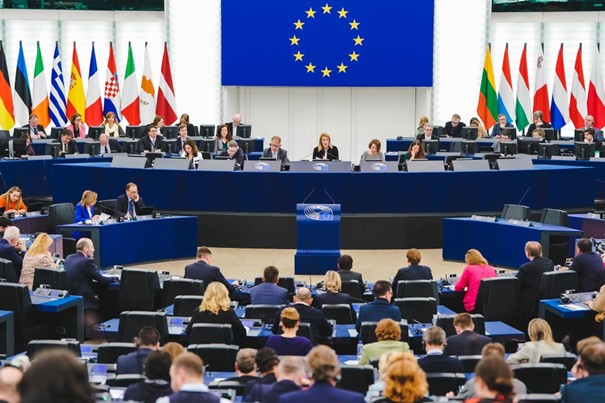
Both will have to follow the Union’s co-decision procedure, which requires an agreement both in and between the Council of Ministers and the European Parliament (EP) – a process that leaves room for substantive changes to the draft legislation.
Based on a simple majority of 44 MEPs – if all delegates cast their vote – the EP will be first to adopt a position after negotiating the CO2 standards revision in its environment committee (ENVI) and the corporate vehicles regulation in the transport committee (TRAN). The Council will follow, adopting its position by qualified majority of 15/27 member states that jointly represent not less than 65 per cent of the EU population.
But the negotiations are not going to be an easy task.
The strongest European party, the centre-right EPP, has been very clear that it wants the combustion ban scrapped in exchange for “technology openness”, and that it rejects mandatory quotas for EVs in corporate fleets.
With 23 out of 86 seats, the group currently holds more than a quarter of all votes in the plenary, which makes highly ambitious targets for EVs in corporate fleets and the survival of the combustion ban unlikely.
This is especially true, given the EPP’s congruence with the general line of right-wing ECR and PfE on the two proposals. Together with the two groups, which perceive the current rules as “ideological over-regulation”, the EPP could assemble up to 43 votes – only one vote away from a majority.
Given this strong position, the negotiations will likely centre around the level of flexibilities and conditionalities, and what happens to the controversial “EU-made” provisions.
The centre-left S&D group as well as the Greens/EFA, which have both criticised the EPP over its stance, are expected to push for more pronounced EV ambition and to keep flexibilities modest.
Edouard Huemer, chair of the ENVI committee, and MEP for S&D told the FT that his group is generally “open to adjustments and flexibilities, but these need to come with safeguards, transparency and caps so they do not weaken the overall objective”.
Renew, the liberal group, could be a decisive swing bloc in the parliamentary discussion, should the bargaining between S&D and EPP present itself as contentious.
The draft proposals will be discussed equally controversial in the Council.
A number of countries have already presented their support for the dilution of electrification ambition.
In early December, Czechia, Slovakia, Poland, Italy, Hungary, and Bulgaria had pushed the Commission to allow combustion technologies after 2035 and include e- and biofuels in the package.
After the package’s presentation, Italy’s foreign minister Antonio Tajani said, “We have stopped the ban […] A choice that protects 70,000 jobs in Italy alone”.
Crucially, Germany, which has the largest manufacturing base in Europe, had long lobbied against the combustion ban.
These positions mirror themselves in statements the FT has received upon request from some member state delegations to the Council.
Germany commented that it “considers technology neutrality and industrial realism … as essential” to achieve climate goals, while Poland said the Commission’s package is “a realistic path to a necessary decarbonisation that takes into account both industrial capacities and social conditions across all Member States”.
Italy’s delegation remarked it wants more flexibility in the CO2 performance targets, as well as “a gradual implementation of standards, combined with EU-level financial support (especially for SMEs that face higher adaptation costs).” It added that it would not support any “legislation that excludes transition solutions, such as e-fuels or other low-carbon alternatives.”
With “Real flexibility for Member States”, “Technological neutrality”, and “European support for infrastructure and industrial conversion”, Spain voiced similar goals for the upcoming talks.
On the other side stand countries like Sweden that had openly warned the EU should not delay the EV transition, fearing it will foster stranded assets.
“Europe’s automotive industry needs long-term predictability and clear signals. Any changes to the CO₂ standards must be carefully assessed against their impact on investment, innovation and global competitiveness”, said the Swedish delegation to the FT.
France agreed, declaring: “The 2035 milestone has played a significant role in guiding investment decisions across the sector. While discussions on technical adjustments and compliance mechanisms are legitimate, France emphasises the importance of preserving the current targets.”
The Dutch delegation maintained a similar position. It stated, the reduction of CO₂ emission standards risk “undermining the 2050 climate neutrality objective”, while running “counter to the goal of strengthening European competitiveness in high-tech and clean technology segments within the automotive sector”, which are crucial for “a reduction in Europe’s dependence on foreign technologies.”
Belgium, Sweden, France, the Netherlands, and Italy also voiced their support for the corporate fleet targets, with the latter two emphasising the importance to increase the harmonisation of rules across the bloc.
The Netherlands noted that it would work in the Council to widen the scope of the regulation from cars and vans to include heavy vehicles, while Italy said it will insist on a “progressive and realistic approach” that allows member state flexibility “to choose national instruments”.
The Belgian delegation told to the FT it welcomes the initiative, “which resembles our existing national company-car fiscal reforms. We hope our Belgian experience can be useful to the future negotiations, not as an example to copy-paste, but as evidence from which to draw conclusions.” The country is a frontrunner regarding the electrification of its vehicle fleet, where – due to favourable fiscal rules – 89 per cent of newly registered BEVs in 2025 were company cars.
Like in the EP, a key question will also be about local content rules set in the draft proposals. As regards, France and Italy said they support a “European production preference”.
First EP committee and Council meetings are scheduled for this Friday.
Given the stakes and complexity, so-called trilogues, informal negotiations between the co-legislators have also already been dated for the end of May. This is to increase pressure for a quick advancement in the intra-institutional talks.
Presumably, hopes are high in Brussels, as well as in Europe’s carmakers headquarters and manufacturing halls to conclude the legislative process by then; however, a swift agreement seems like a tough task.
Also read:
The controversial plan to set ‘Buy European’ rules – by Alice Hancock and Andy Bounds
As my colleagues have highlighted in detail last week, local content rules, including for automobiles and steel, are a particularly sensitive issue for member states and stakeholders.
And:
The automotive package – what’s in it? – by Joshua Starbatty
The content of the Commission’s legislative proposals, broken down.
And:
Brussels to tie EV subsidies to 70% local content rule – Alice Hancock and Kana Inagaki
The draft proposal for the Commission’s Industrial Accelerator Act as seen by the FT, explained by my colleagues.