
Written by Contexte
20 May 2026
When the EU enters the final marathon to pass a law, the spotlight always hits the shouting match between the Parliament and the Council. But quietly sitting at the center of the table is a third player holding all the strings: the European Commission. Far from a passive observer, the Commission acts as the ultimate insider, pulling the strings from the shadows to ensure its own agenda survives the night.
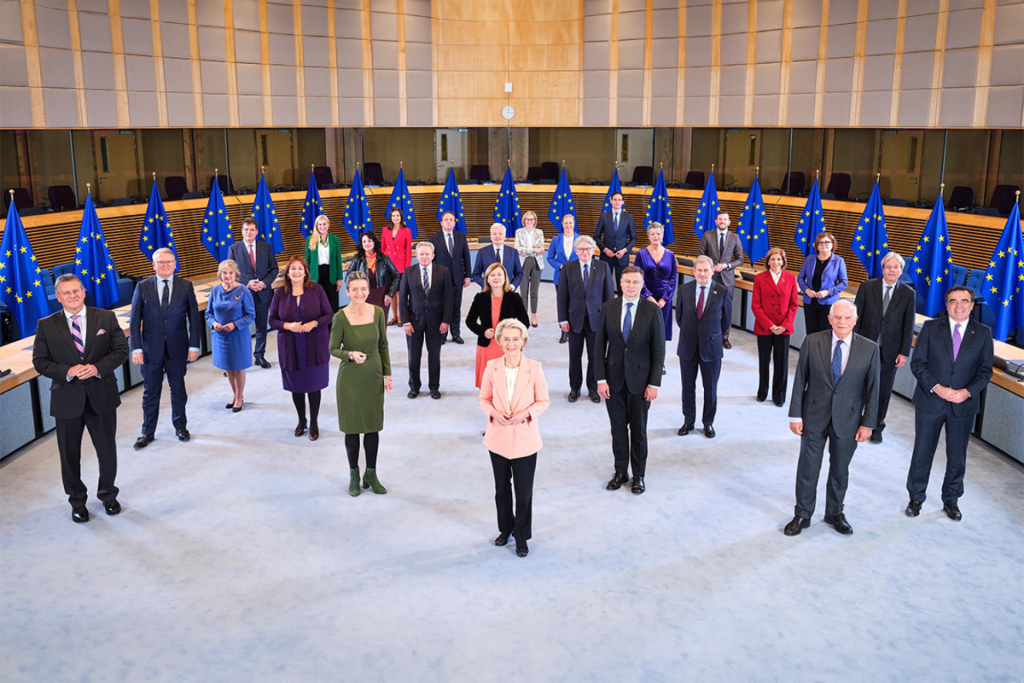
Illustration: Inside the trilogue room, a Commission official maneuvers to protect the institution’s core legislative agenda during intense negotiations.
Source :commission.europa.eu
The “Honest Broker” with a Hidden Agenda
In public, the Commission plays the role of the impartial mediator—the “honest broker” trying to make two warring sides shake hands. It writes the famous “fourth column” in negotiation documents, injecting data and technical expertise when tempers flare. But behind this neutral facade, the mediator actively steers the compromise toward its own preferred destination.
Take the current automotive negotiations as a perfect example. The Commission skillfully injected its technical expertise when debates grew heated over Life-Cycle Assessment (LCA) methodologies or renewable fuel credits. Yet, while pretending to hand out concessions to please everyone, they protected their own absolute red line: the 2035 zero-emission objective remains strictly non-negotiable.
The Internal War Machine
Behind every single concession made during a late-night session lies a rigid internal vetting process. Unlike members of Parliament who can negotiate on instinct or political emotion, the Commission’s team operates under absolute control from headquarters.
To navigate these unpredictable negotiations, field negotiators answer to an internal watchdog committee that meets weekly to script their exact boundaries. On the ground, no one has the authority to make independent, permanent deals. Every compromise accepted under pressure is strictly provisional and must be pitched back to the top of the institution for a green light.
The Ultimate Weapon: The Right of Withdrawal and the Veto Shift
While the Commission acts as a helpful partner, it possesses formidable levers of pressure to protect its vision. Its ultimate weapon is the Right of Withdrawal—a nuclear option allowing it to simply flip the table and pull its proposal entirely if amendments risk distorting the text. Confirmed by the Court of Justice, this right is a calculated threat that requires solid, legal arguments to back it up.
More subtly, the Commission can quietly rig the voting rules against its opponents. If Parliament and the Council team up to push through a massive change the Commission dislikes, it can issue a “negative opinion.” Instantly, national ministers in the Council lose the ability to pass that change with a standard majority and are suddenly forced to achieve a near-impossible unanimous agreement.
An Indispensable Presence Until the Finish Line
The Commission’s tight grip does not slip even after the political deals are struck. It sticks around for the meticulous task of legal-linguistic finalization, ensuring that the fine print remains watertight across all 24 official languages.
Furthermore, if negotiations completely break down and enter a high-stakes conciliation phase, the Treaties officially transform the Commission’s role into an aggressive peacemaker. Legally authorized to take all necessary initiatives to force a reconciliation, the Commission remains the ultimate guarantor of European consistency, ensuring that political compromise never comes at the expense of its original plan.