Written by Contexte
21 May 2026
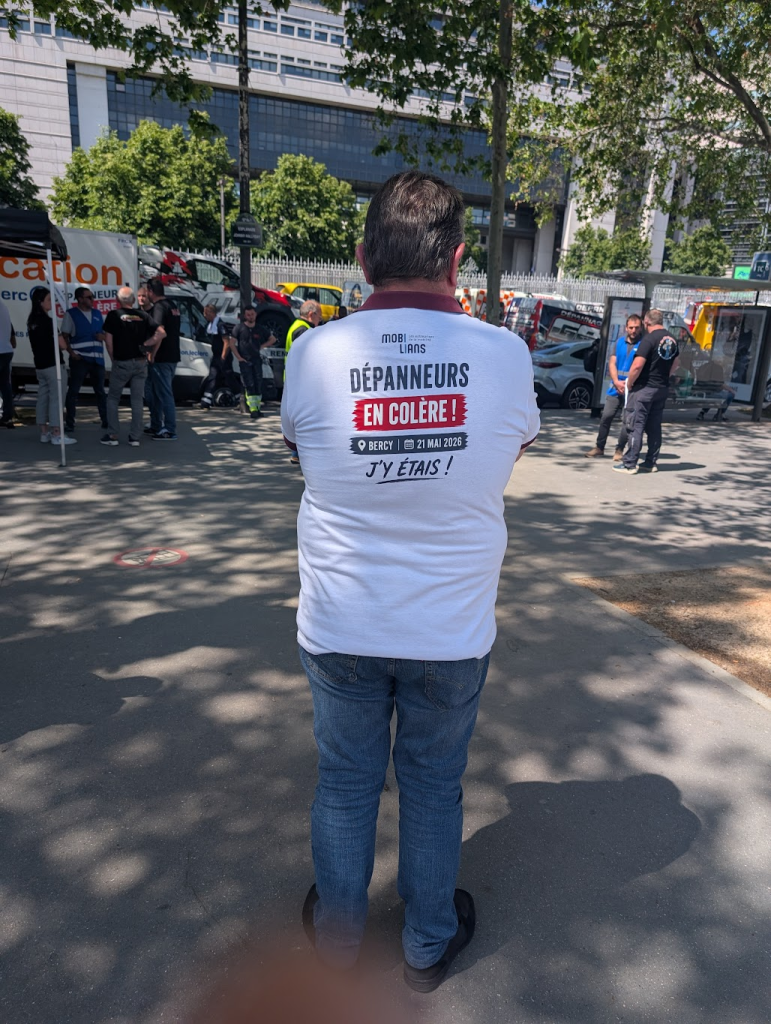
Flashing lights, blaring sirens, and heavy-duty trucks parked across the road—this morning, the forecourt of the Ministry of Economy and Finance in Paris took on the appearance of a barricade. Just twenty-four hours before the decisive plenary vote in the European Parliament on corporate fleet greening, professionals from the towing, recovery, and vehicle impound sectors organized a massive blockade. While they are calling out Bercy, their anger is directly aimed at the final compromises sealed during the European trilogues. The Contexte team went on-site.
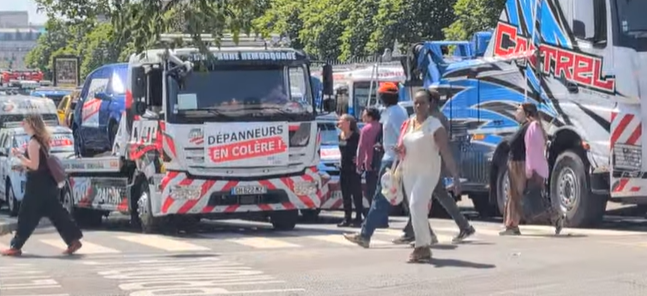
Image Caption: Faced with the imminent ban on public subsidies dictated by Brussels, recovery professionals voice their anger on the forecourt to challenge the French government.
Source: Taken by Contexte.
At the heart of the grievance for these roadside assistance SMEs are two decisions perceived as a death sentence for their sector: the ban on subsidies and the total paralysis of their future investments.
The End of the 25% Flexibility: Bercy Is No Longer Allowed to Help Them
The main trigger for this revolt is the loss of financial sovereignty for Member States. During the TRAN committee trilogues, the Parliament rejected the 25% leeway that the Council had requested to allow countries to freely support their businesses. The rapporteur, Alice Berzolla, was clear: the text reverts to the Commission’s proposal, requiring that 100% of financial support be targeted exclusively toward clean vehicles. In plain terms, “Member States cannot provide financial support for cars that are not zero- or low-emission.”
In Paris, this rule is seen as a technical absurdity. “Europe has just banned our own government from helping us!” chokes Marc, owner of a towing company in the Île-de-France region.
“To tow a broken-down utility vehicle or a bus on the highway, we need high-powered trucks. Electric technology for these tonnages is either completely unaffordable or nonexistent. And today, Brussels is telling Bercy that if they help us buy internal combustion recovery trucks, it’s illegal. It’s a death sentence!”
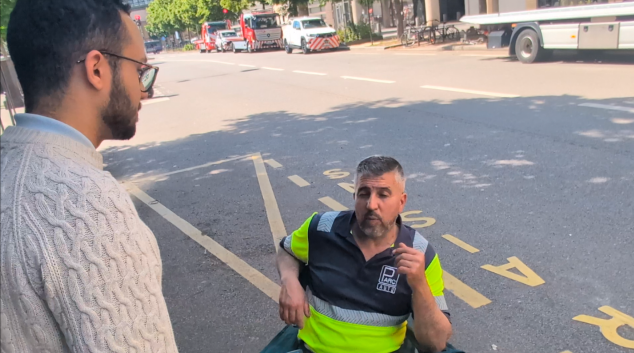
Image Caption: With a grave face, this SME owner worries about the future of his employees in the face of European regulations that he considers technically inapplicable to his profession.
Source: Taken by Contexte.
The “Made in EU” Label: A Legal Vacuum Paralyzing Businesses
As if the loss of public aid were not enough, recovery operators are denouncing total insecurity regarding the future of their fleets. The European agreement stipulates that vehicles must be “Made in the EU” to qualify for any public financial support in the future. However, negotiators decided to postpone the strict definition of this label until the adoption of a future law, the Industrial Accelerator Act (or Net-Zero Industry Act), which will not enter into force for another one or two years.
To justify this deferral, Alice Berzolla argued that imposing a definition today would do “more harm than good to manufacturers, who would have to adapt to one definition today only to change it tomorrow.” On the ground, however, this waiting period creates genuine paralysis. The protesters’ fears align perfectly with the warnings issued by the Renew group, which denounced an immediate “legal vacuum,” as well as the ECR group’s anxiety over the industry’s inability to plan its supply chains.
“A recovery truck represents a decade’s worth of investment for an SME like mine”
“A recovery truck represents a decade’s worth of investment for an SME like mine,” explain Karim and Omar, workers worried about an impound fleet, leaning against the grille of their heavy-duty vehicle.

Image Caption: Karim and Omar point out that purchasing a tow truck commits the survival of their business for over ten years, making this European legislative vacuum completely paralyzing for their activity.
Source: Taken by Contexte.
“How do you expect us to order new trucks today without knowing if they will meet the European criteria cooked up two years from now? We are completely stuck: we can neither buy internal combustion vehicles without aid, nor buy European vehicles because they don’t even know what that means yet!”
Caught between inflexible decarbonization targets and an unfinished legal framework, road professionals feel they are being sacrificed for Brussels’ “pragmatism.” The ultimatum delivered beneath the windows of the Ministry of the Economy is clear: if France does not step up to demand exemptions during tomorrow’s plenary vote, the sirens of the tow trucks may soon echo far beyond Paris.

Image Caption: “It’s ‘not legally binding’? Better to laugh about it than cry.”
Source: Taken by Contexte.