
Written by Contexte
19 May 2026
As the trilogue negotiations on corporate vehicle regulations enter their final phase, a compromise appears to be taking shape, though deep fractures remain between climate imperatives, national sovereignty, and social equity. The Rapporteur emphasized that despite difficult discussions, significant progress has been made on several key points of the text.
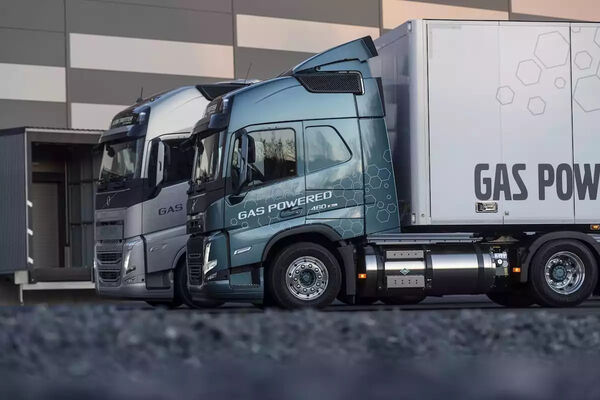
Illustration : A fleet of corporate vehicles symbols a pragmatic transition that adapts the energy mix to real-world conditions, safeguarding jobs and ensuring mobility where structural constraints are highest.
Source : auto-infos.fr
Flexibility and “Conditionality”: The 10% Threshold
One of the major points of the agreement involves the introduction of a conditionality clause. It has been agreed to allow a 10% reduction in emission targets under two highly specific scenarios: a demonstrated lack of public charging infrastructure, or a significant negative impact on employment within a Member State’s domestic automotive sector.
While the Greens welcome this step, they worry that such flexibility could become a disincentive for states to invest in their own infrastructure, thereby threatening global environmental targets. Conversely, groups like the EPP and ESN welcome what they view as “realistic adjustment mechanisms.”
The “Made in EU” Conundrum and Financial Sovereignty
To guarantee legislative consistency, the definition of “Made in EU” will be modeled after the future Net-Zero Industry Act (NZIA) via a delegated act. However, this choice alarms Renew and ECR (Poland), who denounce a “legal vacuum,” fearing industries will be forced to comply with a rule whose key concept remains undefined until a later date. Consequently, Renew proposes a provisional clause that treats any vehicle assembled within the Union as European until the definitive act is adopted.
Simultaneously, regarding sovereignty over subsidies (Article 4.4), the text reverts to the Commission’s initial version, requiring 100% of financial support to be directed toward clean vehicles to respect competition law. Patriots for Europe (PfE) firmly reject this decision, viewing it as a “preemptive strike” against the budgetary sovereignty of Member States. The Commission maintains that this regulation has no direct impact on the budget, noting that the creation of new funding lines belongs in the Multiannual Financial Framework (MFF) negotiations.
The Battle for the Social Aspect: Second-Hand Leasing
The Left has made the second-hand social leasing mechanism its absolute red line. The objective is to ensure that the electric transition is not reserved solely for wealthy households by facilitating second-hand market access for workers.
Doubts have been raised regarding the legal basis of this measure. While the Parliament demands a binding foundation, the Commission and certain negotiators propose relegating this ambition to the text’s recitals. For The Left, such a move would gut the promise of social justice, as recitals lack legally binding force.
Technological Neutrality and Timeline
The EPP group affirmed that technological neutrality remained a non-negotiable “red line” that it successfully preserved throughout the debates. Conversely, the Greens and S&D denounce the inclusion of vague terms like “alternative fuels” or “synthetic fuels,” fearing they will serve as loopholes to prolong the use of internal combustion engines.
Regarding the implementation timeline (Article 6), precise dates have been locked in: the year 2029 for paragraph 1 and 2031 for paragraph 2.
In Short, a Compromise Under High Scrutiny
The Rapporteur reiterated that these concessions were necessary to secure a majority, as no progressive group possesses enough weight to impose its views alone. While the EPP and its allies celebrate a victory for “pragmatism,” the Greens and The Left condemn the influence of industrial lobbies, warning that a transition lacking real financial accessibility is bound to fail socially.