
Written by Contexte
19 May 2026
Fractured by procedural chaos and a revolt against the Commission’s influence, the European Parliament is watching its automotive decarbonization mandate weaken under compromises that downgrade social safeguards and legislative sovereignty into non-binding declarations of intent.
The negotiations are plagued by an unprecedented crisis of legitimacy, triggered by procedural violations and heavy accusations leveled at the Rapporteur. The Rapporteur is suspected of sacrificing the Parliament’s democratic mandate by shifting essential clauses into non-binding recitals just to satisfy the Commission. Substantively, a fragile compromise is emerging around a Life-Cycle Assessment (LCA) deferred to 2035, standard €95 fines subjected to specific conditions, and a fierce battle to ensure these revenues directly fund a socially just transition.
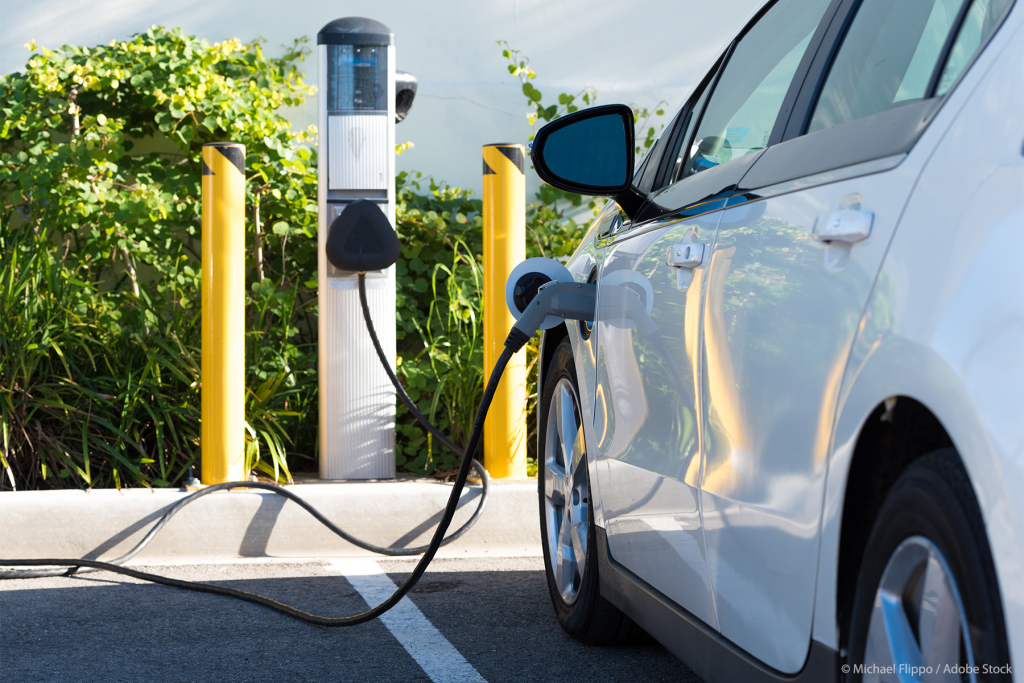
Illustration: At the heart of European industry, this charging vehicle symbolizes the ambition of a “Made in EU” standard that integrates sustainability and social justice, ensuring the ecological transition actively supports employment and quality job standards in Europe.
Source : europarl.europa.eu/
Life-Cycle Assessment (LCA): A Deferred but Regulated Revolution
The integration of the Life-Cycle Assessment (LCA) marks a historic shift, moving away from a mere “tailpipe” focus to measuring a vehicle’s total carbon footprint. While Renew Europe secured a victory in principle, concrete application is pushed back to 2035 to allow the Commission time to stabilize a robust, harmonized methodology. To prevent this mechanism from becoming a regulatory loophole, the Greens successfully pushed for strict safeguards: supply chain accounting (SCA) super-credits are capped at 5%, and total flexibilities cannot exceed a global ceiling of 10%. Furthermore, a non-accumulation clause will prevent manufacturers from combining multiple accounting advantages simultaneously.
The Price of Pollution: The Debate Over Effective Fines
While consensus has formed around a fine of 95€ per excess gram of CO2, the devil remains in the enforcement details. The current compromise includes a 15% discount for manufacturers that prove massive investments in electric vehicle production. This provision is at the center of a heated controversy: The Left denounces it as a watering down of the law’s deterrent effect, pointing out that this discount drops the effective fine to 80€, thereby reducing the financial incentive to hit climate targets. The Commission, however, insists that these premiums must remain a “driver of compliance” rather than a generalized discount mechanism.
The Social Climate Fund: A Fragile Parliamentary Victory
Driven by The Left and S&D, the parliamentary coalition won a major political battle by ensuring that 100% of fine revenues are funneled into the Social Climate Fund, up from the 55% originally planned. This measure aims to ensure that pollution penalties directly fund the protection of the most vulnerable citizens. However, this breakthrough remains precarious as the Council maintains fierce opposition to this direct link, refusing to let the fines be automatically tied to this specific fund.
A Parliament Fractured by the Commission’s “Method”
Beyond the numbers, the very structure of the text divides the floor. While the Rapporteur celebrates keeping “just transition” safeguards within binding articles, the opposition (ECR, PfE, ESN) denounces it as an “institutional capitulation.” The breaking point centers on Article 18 (the safeguard clause): originally designed as a binding safety net in times of crisis, it has been downgraded to a simple non-binding recital, stripping it of all mandatory legal force. For the right-wing and sovereignist groups, the Rapporteur “traded away” the Parliament’s mandate, handing discretionary power to the Commission via delegated acts and turning what should have been a sovereign law into a technocratic compromise steered by the European executive.