
Written by Contexte
19 May 2026
As European co-legislators lock themselves away to seal the future of the automotive industry, tension continues to escalate, spilling far beyond the quiet meeting rooms of Brussels. Worker protests are intensifying on the ground, driven by sheer outrage over what is perceived as a total abandonment of laborers in favor of institutional compromises.
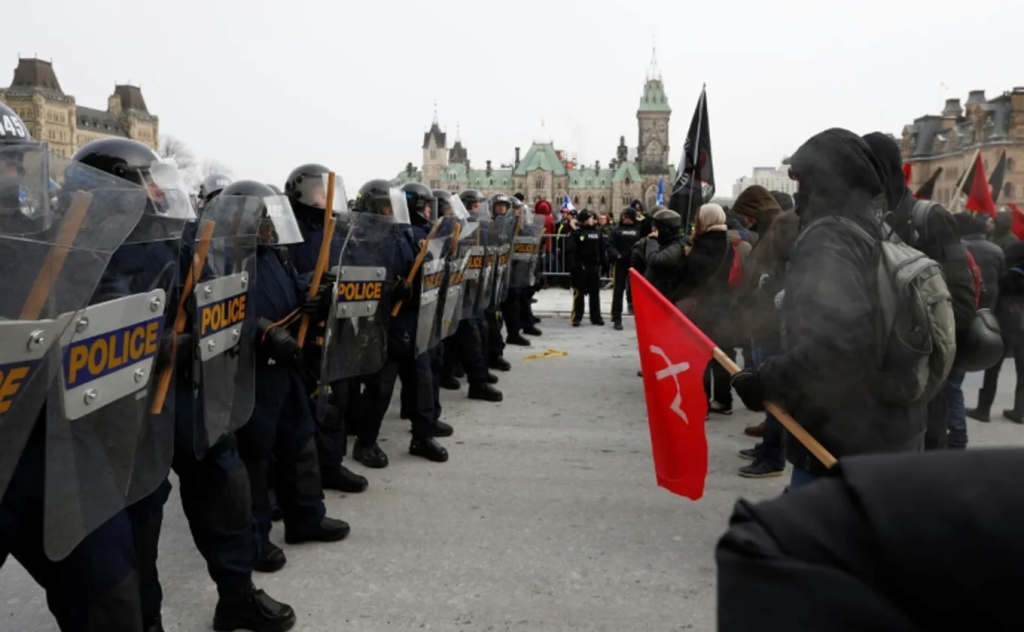
Illustration: Tensions flare in Brussels as numerous clashes broke out today. Trade unions have called for calm among the marches of citizens and workers, who are revolting against a decision-making process deemed opaque and plagued by procedural violations.
Source : challenges.fr
A Climate of Democratic “Betrayal”
Inside the Parliament, the revolt has taken a procedural form. A massive rebellion, led by the PfE, ECR, ESN, Greens, and The Left groups, erupted following a blatant violation of Rule 75(2) of the Rules of Procedure. Both the Secretariat and the Rapporteur stand accused of deliberately withholding crucial negotiation documents, only transmitting them to shadow rapporteurs minutes before discussions commenced. For protesters and opposition MEPs alike, this lack of transparency is a calculated effort to silence dissenting voices and push through the Commission’s agenda.
The Crisis on the Factory Floor: Marek Kowalski Confronts Negotiators
On the assembly lines, anxiety has turned to rage. Marek Kowalski, representing the Automotive Workers’ Alliance, sharpened his rhetoric during an impromptu address outside the Parliament:
“You discuss ‘super-credits’ and ‘multipliers’ for manufacturers, but for us, you are only preparing mass layoffs financed by public money. While you move our social protections into non-binding recitals, you offer flexibilities to the bosses. We are not adjustment variables in a technical document; if this transition does not guarantee our jobs through legally binding articles, we will blockade the factories until Brussels hears that a ‘just transition’ is not an option, but a right.”
Workers are condemning an intolerable paradox: the Council and the Commission refuse to firmly anchor workforce safeguards into the body of the law, fearing it will “blur the lines” between climate and social policy.
The Dismantling of the Social Mandate
At the heart of the protest lies the systematic downgrading of social protections. The Rapporteur admitted that “just transition” clauses are facing heavy pressure to be relegated to the recitals.
The Second-Hand Social Leasing Dispute serves as a prime example. The Left and S&D are fighting for a mandatory second-hand social leasing mechanism to ensure clean vehicles remain affordable. However, the Commission and the Council are pushing to make it a voluntary measure, gutting the promise of its substance.
The “Made in EU” Social Vacuum highlights another critical failure. The Council’s refusal to include a strong social dimension—such as working conditions and fair wages—within the criteria for European manufacturing is viewed as a direct insult by trade unions.
National Sovereignty “Trampled”
The anger is further fueled by clashes over budgetary sovereignty. The Patriots for Europe (PfE) group denounces Article 4(4) as a “preemptive strike against state sovereignty,” because it mandates that 100% of national financial aid must be directed toward clean vehicles, stripping capitals of discretionary power over their own budgets.
Furthermore, alignment of the “Made in EU” definition with the future Net-Zero Industry Act (NZIA) via a delegated act creates a major “legal vacuum”. For ECR (Poland), it is unacceptable to demand that industrialists plan billions in investments based on a definition that will only be revealed much later.
Between smoke bombs in the streets and points of order in the hemisphere, the message is clear: without robust social and industrial guarantees in the final text, the ecological transition risks collapsing under the weight of social revolt.